Bradford’s Muslim Community: A Short History
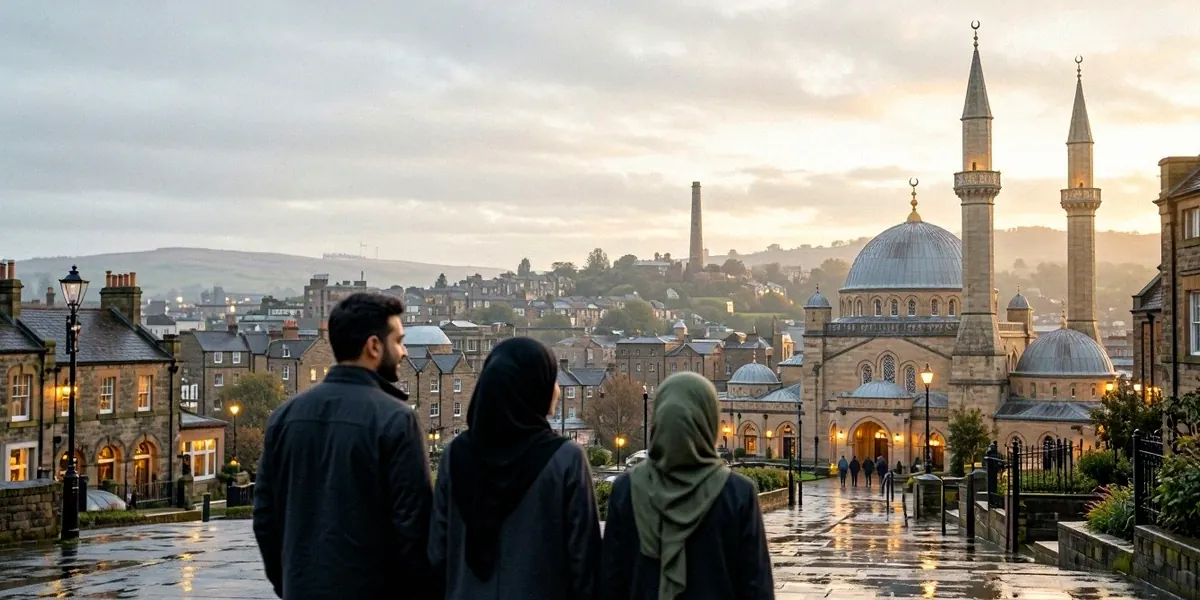
Stand at the edge of Lister Park on a Friday afternoon and you will hear it before you see it: the adhan drifting across the water, mingling with the traffic on Keighley Road. It is a sound that would have been unimaginable in Bradford 150 years ago, and yet today it is part of the city’s everyday rhythm. How did Bradford become one of Britain’s most significant Muslim cities? The answer stretches from the docks of South Shields and Liverpool to the spinning floors of Manningham, and from terraced houses turned into prayer halls to the women now reshaping mosque governance. Here is that story, as we understand it.
Early Roots: From Yemeni Sailors to Mill Workers
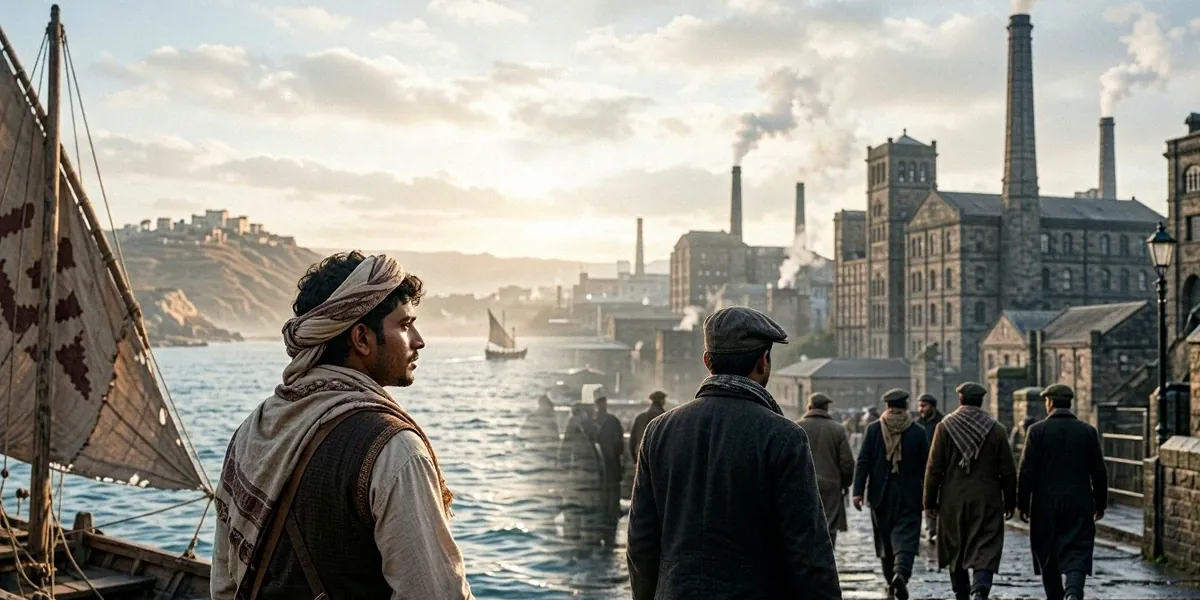
The first Muslims in the north of England were not factory workers but seafarers. Long before Bradford’s mosques existed, Muslim men were arriving in Britain’s port cities, and their stories connect directly to the textile boom that built this city.
Yemeni and Somali Seafarers in the North
From the 1880s onwards, Yemeni and Somali sailors settled in British port towns such as South Shields, Cardiff and Liverpool. Many had worked the routes between Aden and Britain, and some jumped ship or simply stayed. Boarding houses, seamen’s missions and small prayer rooms followed. These communities were tiny and often invisible, but they established an important principle: Islam in Britain was not a single wave of migration, but many.
South Asian Migration and the Wool Mills
Bradford’s own Muslim story begins in earnest with the mills. From the late 19th century, and accelerating after the Second World War, workers were recruited from the Indian subcontinent — particularly from the Mirpur district of Kashmir and from what is now Pakistan — to fill labour shortages in the wool and worsted industry. They arrived in a city built on textiles, took night shifts, saved wages, and sent for families. By the 1960s, streets around Manningham, Girlington and Great Horton were becoming permanently settled South Asian communities, and the Muslim population of Bradford was growing fast.
Building Community: Mosques, Clubs and the Bradford Council for Mosques
Faith needs a place. In Bradford, that place was often a converted building — and sometimes a converted church.
The First Mosques on Leeds Road and Manningham
The earliest mosques in the city were not purpose-built. They were terraced houses, warehouses and former church buildings adapted for prayer. Leeds Road and Manningham became early centres of Muslim communal life, with the first established mosques appearing in the 1960s and 1970s. Alongside them came community clubs, funeral services, halal butchers and madrasahs for children. These institutions did more than serve religion: they gave newcomers a foothold, a place to organise, and a voice.
The Bradford Council for Mosques and Civic Representation
As the number of mosques grew, so did the need for a shared body. The Bradford Council for Mosques was founded in the early 1980s and quickly became the most recognised point of contact between Muslim communities and the city’s institutions — the council, the police, schools and the media. It coordinated on issues such as halal food in schools, burial provision and religious education. For decades it has been the default representative voice, even when that role has been contested from within.
Faith, Protest and the Rushdie Affair
If one event pushed Bradford’s Muslims into the national spotlight, it was 1989.
The 1989 Protests and National Media
The publication of Salman Rushdie’s The Satanic Verses prompted protests in Bradford and other British cities. A book burning in the city became one of the defining images of the decade, and the national press descended. Much of the coverage was hostile, and it framed Muslim communities as outsiders rather than neighbours. For many Bradford Muslims, the experience was a hard lesson in how they were being seen — and a spur to organise more deliberately.
Aftermath: New Generations, New Voices
The years that followed produced a more confident, better-educated generation. Young Muslims entered universities, law, journalism and local politics. Women in particular began to claim space in community leadership, questioning why mosque committees were almost entirely male and why women’s access to prayer space was so often an afterthought. The Rushdie affair did not create that activism, but it accelerated it.
Muslim Women Leading in Bradford Today
Today the most interesting developments in Bradford’s Muslim life are often led by women.
Women-Led Mosque Projects and Prayer Spaces
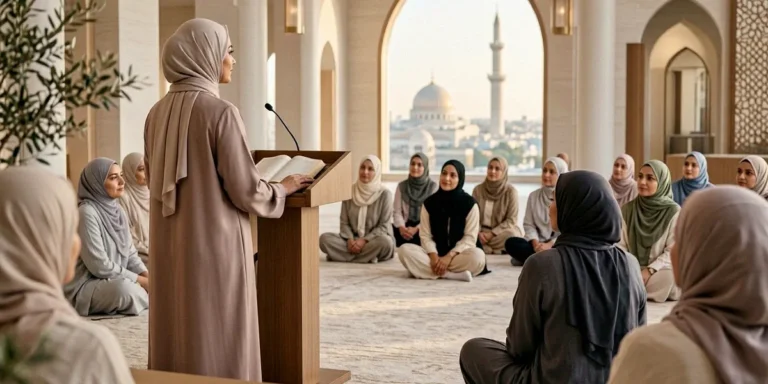
Across the UK, women-led mosque initiatives have emerged to provide prayer, education and pastoral care in settings where women hold decision-making roles. In Bradford, the Bradford Muslim Women’s Council and a network of local activists have campaigned for better facilities, women on mosque committees, and spaces where women can pray, learn and organise without asking permission. These projects are not about separating from men’s mosques — they are about inclusion, accountability and good governance.
Challenging Mosque Governance from Within
Mosque governance in Britain has traditionally been shaped by trustee models, often drawn from the first generation of settlers. That model has strengths — stability, property ownership, continuity — but it has also excluded women and younger members. Campaigns for transparent elections, published accounts, safeguarding policies and female representation are now mainstream asks. A women-led mosque is not a novelty: it is a practical answer to a governance gap.
- Women on mosque committees and trustee boards
- Dedicated, well-maintained women’s prayer facilities
- Transparent elections and published accounts
- Safeguarding and pastoral care for all ages
- Youth representation in decision-making
A Living History: Culture, Food and Future Generations
Bradford’s Muslim contribution is not only religious. It is cultural, culinary and literary.
Bradford Literature Festival and Muslim Storytelling
The Bradford Literature Festival has become one of the UK’s most ambitious literary events, and Muslim writers, poets and thinkers are central to its programme. Alongside it, the restaurants of Great Horton Road — the curry houses that have fed generations of families, students and taxi drivers — remain one of the city’s most visible cultural exports. Food, poetry and faith sit side by side here.
Youth, Education and the Next Chapter
Bradford is one of the youngest cities in the UK, and its Muslim population is younger still. That means the next chapter will be written by people who grew up here, speak with Bradford accents, and expect their institutions to reflect them. Education, digital media and community organising are the tools they are using.
FAQ
When did Muslims first come to Bradford?
The earliest Muslim presence in the north of England came through Yemeni and Somali sailors settling in port cities from the late 19th century. In Bradford itself, Muslim settlement grew mainly from the mid-20th century, as workers from South Asia were recruited for the textile mills.
What is the Bradford Council for Mosques?
Founded in the early 1980s, the Bradford Council for Mosques is a representative body that links local mosques with the city council, police, schools and media. It has been a key voice on issues such as halal food, burial provision and religious education.
What is a women-led mosque?
A women-led mosque is a prayer and community space where women hold leadership and governance roles — as trustees, imams or organisers. These projects focus on inclusion, accountability and equal access to prayer and education, rather than separation from existing mosques.
Where are Bradford’s earliest mosques?
The first mosques in Bradford were converted terraced houses and former church buildings, with early centres of Muslim communal life developing around Leeds Road and Manningham from the 1960s onwards.
How can I get involved in Muslim community leadership in Bradford?
Start locally: attend your mosque’s AGM, ask about committee elections, volunteer with youth or women’s groups, and connect with networks such as the Bradford Muslim Women’s Council. Governance change usually begins with showing up.
Bradford’s Muslim history is still being written. From the sailors who first settled in northern ports to the mill workers who built communities around Leeds Road and Manningham, from the turbulence of 1989 to the quiet determination of women’s committees today, this is a story of continuous adaptation. Women-led mosque models are not a footnote to that history — they are central to its next chapter, and to what a genuinely inclusive British Muslim institution looks like.