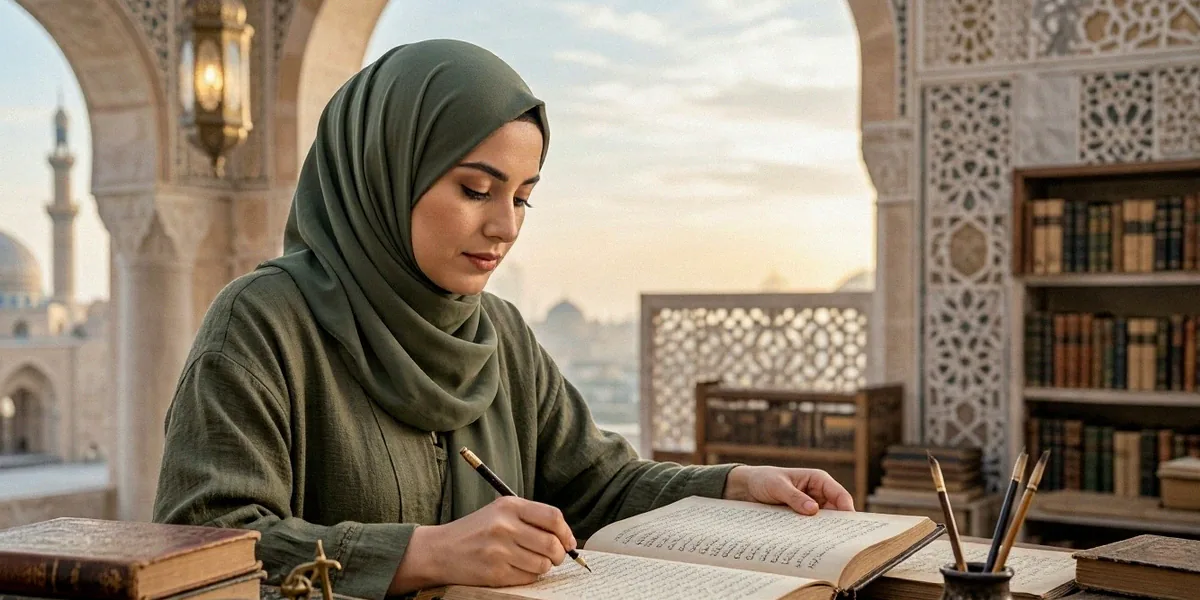
Women Scholars in Islamic History: Reclaiming a Legacy of Knowledge
The first person to memorise the entire Qur’an was a woman. The first to narrate hadith was a woman. Yet if you asked most Muslims in Britain today to name the great scholars of our tradition, you would hear a list of men. That gap between historical reality and modern perception is not an accident — it is a forgetting. Here at womenledmosque.co.uk, we believe that reclaiming this legacy is essential work, especially as we push for women-led mosque spaces and genuine community leadership in Bradford and across the UK.
The Golden Age of Women Scholars in Islam
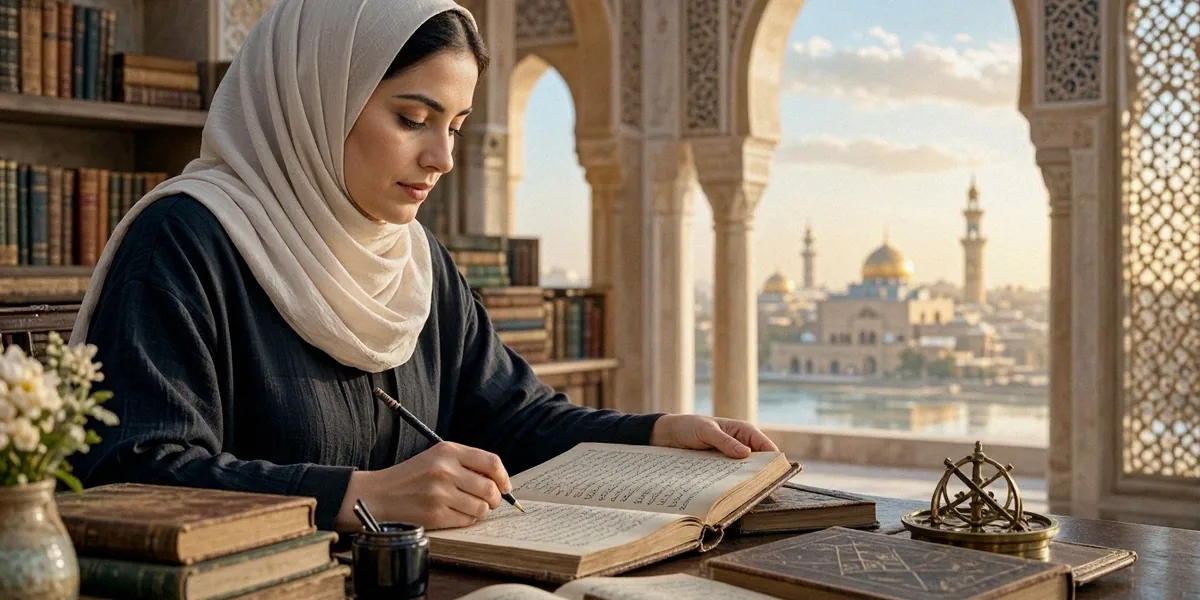
In the earliest decades of Islam, women were not peripheral to scholarship — they were central to it. The Prophet Muhammad’s household was a hub of learning, and his wives and female companions became primary sources for law, theology, and prophetic tradition. People travelled to them for rulings. Judges consulted them. Their memories preserved the community’s most important texts.
Aisha bint Abi Bakr: The Scholar of the Ummah
Aisha bint Abi Bakr narrated over 2,000 hadith, making her one of the most prolific narrators in Islamic history. She was a primary source for Islamic jurisprudence, and senior companions — including Umar and Abu Musa al-Ash’ari — referred legal questions to her. Her contributions spanned inheritance law, ritual practice, and the details of the Prophet’s daily life. When later scholars compiled the great collections of hadith, her narrations formed a substantial backbone of the corpus.
Umm Salama: Advisor and Narrator
Umm Salama, another wife of the Prophet, was known for her counsel as much as her narration. She advised on matters of state and community during pivotal moments, and she transmitted hadith that shaped rulings on prayer, marriage, and travel. Her authority was such that companions sought her opinion directly rather than relying on second-hand reports.
Women as Transmitters of Hadith
Across the generations that followed, women remained critical links in the chain of transmission. Scholars of hadith travelled to study with female narrators, and a number of women were granted the title of musnida — recognised for their mastery of entire collections. The idea that women’s voices were excluded from religious knowledge is a later distortion, not an original norm.
Medieval Women Scholars and the Institutions They Built
Women did not only transmit knowledge — they built the institutions that preserved it. From North Africa to Egypt, women founded, funded, and taught in centres of learning that shaped Islamic civilisation for centuries.
Fatima al-Fihri and al-Qarawiyyin
Fatima al-Fihri founded the University of al-Qarawiyyin in 859 CE, recognised as the world’s oldest continuously operating university. She used her inheritance to establish the mosque and school in Fez, Morocco, and the institution went on to teach figures in mathematics, astronomy, law, and philosophy. It remains a UNESCO-recognised site and a working university today. A woman built the oldest university in the world — this is not a footnote; it is a headline we have been taught to forget.
Sayyida Nafisa: Teacher of Imam al-Shafi’i
Sayyida Nafisa, a descendant of the Prophet who settled in Egypt, ran teaching circles in Cairo so influential that Imam al-Shafi’i — one of the four great imams of Sunni jurisprudence — attended her lectures and consulted her on hadith. Her students included some of the most respected scholars of the era. A woman teaching a founding jurist of the madhhab is a fact that should reframe how we think about authority in Islamic scholarship.
Women’s Role in Endowing Libraries and Madrasas
Across the medieval Islamic world, women endowed libraries, madrasas, and charitable foundations through waqf (endowments). These were not small gestures — they funded salaries for teachers, stipends for students, and the copying of manuscripts. Women were architects of the scholarly infrastructure that sustained Islamic learning for generations.
Women Scholars in Andalusian and Ottoman Contexts
The tradition continued in Al-Andalus and the Ottoman Empire, where women were patrons, teachers, and intellectuals. Their contributions challenge any narrative that treats women’s scholarship as exceptional or unusual.
Lubna of Cordoba: Mathematician and Librarian
Lubna of Cordoba was a 10th-century mathematician and librarian in Al-Andalus who managed the royal library. She was part of the court of Caliph al-Hakam II and was known for her expertise in mathematics, grammar, and calligraphy. The library she oversaw was one of the largest in the world at the time, and her role in organising and expanding it shaped the intellectual culture of Islamic Spain.
Wallada bint al-Mustakfi and Literary Salons
Wallada bint al-Mustakfi, an Umayyad princess in Cordoba, ran literary salons where poets and scholars gathered to discuss poetry, philosophy, and religion. These salons were spaces where women participated openly in intellectual life, and Wallada herself was a poet of considerable reputation. Her example shows that women’s leadership in learning was not confined to religious subjects.
Ottoman Women as Patrons of Education
In the Ottoman Empire, women from the imperial court and beyond funded and taught in madrasas, commissioned libraries, and established charitable foundations. Some women ran study circles in their own homes that attracted leading scholars of the day. Their patronage was not merely financial — it was intellectual and institutional.
Why This History Matters for Muslim Women in the UK Today
We do not study this history for nostalgia. We study it because it directly challenges the assumptions that keep women out of mosque leadership in Britain today. If women narrated the most important texts in our tradition, founded the world’s oldest university, and taught the imams who shaped our jurisprudence, then the idea that women cannot sit on a mosque board or lead a congregation is not Islamic — it is cultural.
Challenging the Myth of Women’s Absence
The claim that women have never held religious authority is simply false. It is a myth built on selective memory. When we hear that women-led mosques are “un-Islamic” or “innovative,” we can point to 1,400 years of history that says otherwise. The Muslim Council of Britain has published guidance on women’s participation in mosque governance, and that guidance exists precisely because the current exclusion of women is a problem — not a tradition.
Lessons for Mosque Governance in Bradford
Bradford has seen grassroots initiatives for women-led mosque spaces and inclusive community leadership. These are not fringe experiments — they are part of a broader movement across the UK to make mosques genuinely representative of their communities. When women are excluded from boards, committees, and decision-making, mosques lose talent, perspective, and the trust of half their congregation.
Building Community Leadership for the Future
We need to think beyond simply “allowing” women into existing structures. We need to build new structures where women’s leadership is normal, not exceptional. That means:
- Creating women-led mosque spaces where women lead prayers, deliver khutbahs, and run governance.
- Ensuring mosque boards have meaningful female representation, not token seats.
- Funding scholarships and mentoring for women pursuing Islamic scholarship in the UK.
- Partnering with initiatives like the Women’s Mosque of America as inspiration while developing UK-specific models.
- Documenting and sharing the history of women scholars in our own communities.
Reclaiming Our Place: From History to Action
History gives us the blueprint, but action is ours to take. Across the UK, women are already doing this work — in Bradford, London, and beyond. We are not asking for permission to lead. We are reclaiming a legacy that was always ours.
Creating Inclusive Spaces in UK Mosques
Inclusive spaces are not just about prayer halls. They are about governance, education, and community life. A mosque that welcomes women into leadership is a mosque that takes seriously the full humanity and intellect of its congregation. This means accessible facilities, women on committees, women teaching classes, and women’s voices in decision-making.
Mentoring the Next Generation of Women Scholars
We need to invest in the next generation. That means creating mentoring programmes, supporting women to study Arabic and Islamic sciences, and building networks of women scholars in the UK. The legacy of Aisha, Fatima al-Fihri, and Lubna of Cordoba is not a museum piece — it is a living invitation.
Advocating for Women on Mosque Boards
Advocacy is not confrontation. It is an invitation to build better institutions. We encourage mosques in Bradford and across the UK to adopt clear policies on women’s participation, drawing on the Muslim Council of Britain’s guidance and the examples of women-led mosque initiatives. Change is possible when we frame it as strengthening the community, not dividing it.
FAQ
Were there really women scholars in early Islam?
Yes. Aisha bint Abi Bakr narrated over 2,000 hadith, and women like Umm Salama were consulted for legal opinions. Women were central to the transmission of hadith and the development of Islamic jurisprudence.
Who founded the world’s oldest university?
Fatima al-Fihri founded the University of al-Qarawiyyin in 859 CE in Fez, Morocco. It is recognised as the world’s oldest continuously operating university.
What is a women-led mosque?
A women-led mosque is a mosque where women hold leadership roles in governance, teaching, and prayer leadership. It is not a separate space for women — it is a mosque where women’s leadership is normal and valued.
Has the Muslim Council of Britain addressed women’s mosque participation?
Yes. The Muslim Council of Britain has published guidance on women’s participation in mosque governance, encouraging mosques to include women in decision-making structures.
How can I get involved in Bradford?
You can connect with local grassroots initiatives for women-led mosque spaces and inclusive community leadership. Reach out to us at womenledmosque.co.uk to learn more about events, mentoring, and advocacy in Bradford and across the UK.
Reclaiming the legacy of women scholars is not about nostalgia — it is about building a more just and vibrant Muslim community in the UK. It starts with our own mosque governance, our own communities, and our own willingness to remember what we were always meant to be.