
Running a Women’s Study Circle: A Guide for UK Mosques
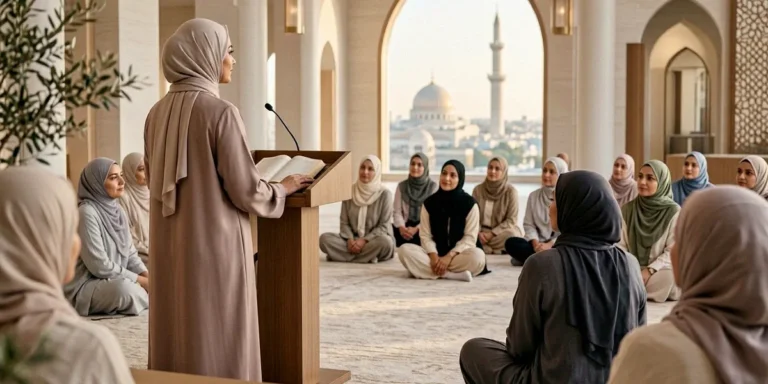
When we first floated the idea of a women’s study circle at our mosque in Bradford, the response was mixed. Some sisters were thrilled — they had been waiting years for a space where they could learn without feeling like guests in their own community. Others were sceptical, wondering whether the mosque committee would ever agree to it. We spent weeks in meetings, answering questions about everything from safeguarding to scheduling. But when that first session finally happened — twenty women gathered in a small side room, Qurans open, tea going cold — we knew we had started something that mattered. This guide is for anyone who wants to do the same in their own city.
Why Women’s Study Circles Matter in the UK

Walk into most mosques in Britain and you will find plenty of activity for men — lectures, halaqas, youth clubs, committee meetings. For women, the offer is often thinner. A weekly tafsir class if you are lucky, a sewing circle if you are not. That gap is not accidental; it reflects decades of assumptions about who gets to lead religious learning and who gets to sit at the back.
The Need for Women-Only Spaces
Women-only study circles are not about segregation for its own sake. They are about creating room for Muslim women to ask questions they might not feel comfortable raising in a mixed setting — questions about marriage, motherhood, work, mental health, and how to read classical texts in light of their own lives. In many UK mosques, women’s facilities are an afterthought: a partitioned area, a cramped room, or a shared hall. A dedicated study circle signals that women’s religious education is not a favour but a priority.
Building Confidence Through Knowledge
Knowledge changes how women see themselves. When a sister learns that Aisha (RA) narrated over two thousand hadith and issued legal opinions, or that Muslim women scholars like Sayyida Nafisa taught imams in Cairo, something shifts. Suddenly the idea of a woman chairing a mosque committee or leading a charity does not seem radical — it seems historical. Study circles give women the vocabulary and confidence to take part in discussions that have often been closed to them.
Challenging Stereotypes in Mosque Governance
Mosque governance in the UK remains overwhelmingly male. Trustees, imams, and committee members are usually men, and women’s voices are frequently absent from decisions about budgets, buildings, and programmes. A women’s study circle does not fix that overnight, but it creates a pipeline. Women who have spent years studying together, organising events, and building trust become the obvious candidates when a mosque finally decides to diversify its board. That is how change actually happens — not through a press release, but through women who are already in the building.
Getting Started: Practical Steps for Your Circle
Starting a study circle is less complicated than it sounds, but it does require patience. Here is how we approached it in Bradford, and what we would do differently next time.
Finding a Venue and Overcoming Resistance
Your first challenge is often not logistics but permission. Some mosque committees will welcome the idea immediately; others will ask why women cannot simply join existing classes. Our advice is to come prepared. Bring a clear proposal: what the circle is for, who it is for, when it will run, and how it will be supervised. Speak to the imam privately first — he can be your strongest ally. If the main mosque is resistant, consider starting in a community centre, a library meeting room, or even a sister’s living room. Many successful circles in Birmingham and Leicester began outside mosque walls before being invited in.
Setting Aims and Choosing Topics
Decide collectively what the circle is for. Is it a tafsir group? A book club? A space for discussing fiqh and family life? We recommend a mix. A typical term for us looks like this:
- Weeks 1–4: Quranic study with a consistent theme (e.g. justice, patience, mercy)
- Weeks 5–8: Hadith and seerah, focusing on women around the Prophet (PBUH)
- Weeks 9–10: Contemporary issues — mental health, parenting, work, activism
- Final session: Open discussion and feedback for the next term
Write your aims down. It helps with funding applications and keeps the group focused when energy dips.
Recruiting Members and Advertising
Word of mouth is still the most effective tool. Tell the women you already know, ask them to bring one friend, and use WhatsApp groups to coordinate. A simple flyer in the mosque lobby, a post on local Muslim community Facebook pages, and a mention in the Friday announcement (if you can get one) will do the rest. Do not worry about numbers at first. Ten committed women are worth more than fifty curious ones.
Structuring Sessions and Choosing Content
A good session has rhythm: opening, learning, discussion, closing. Ours run for ninety minutes, with the first fifteen minutes for arrivals and tea. That informal time is often where the real conversations happen.
Balancing Quranic Study and Contemporary Issues
We alternate between classical texts and lived experience. One week we will read a passage from Surah Al-Nisa with a reputable tafsir; the next we will discuss how those verses speak to issues Muslim women face in the UK today — from workplace discrimination to domestic abuse. Resources from the Muslim Women’s Network UK have been invaluable here, particularly their guidance on gender-based violence and their research on Muslim women’s experiences in mosques.
Inviting Guest Speakers and Scholars
Guest speakers bring fresh energy and expertise. We have hosted local female scholars, a counsellor, a lawyer, and a midwife. When inviting speakers, be clear about the format: how long they have, whether questions are welcome during or after, and what the audience expects. Always ask for references or check credentials, especially for anyone speaking on fiqh.
Using Technology for Hybrid Sessions
Not every sister can attend in person — some have young children, some work shifts, some live far from the mosque. A simple WhatsApp video call or Zoom link lets them join from home. We record audio (with permission) and share it in the group so nobody misses out. Technology is not a replacement for gathering, but it widens the circle.
Overcoming Challenges and Building Sustainability
Every study circle hits obstacles. The ones that survive are the ones that plan for them.
Childcare and Accessibility
Childcare is the single biggest barrier to women’s participation. In Bradford, we partnered with a local women’s charity to provide a crèche in a nearby room, staffed by volunteers with DBS checks. If that is not possible, consider running sessions during school hours, offering a children’s corner with books and colouring, or rotating the venue between sisters’ homes.
Funding and Resources
You do not need much money, but you do need some. Printing, refreshments, speaker honorariums, and childcare all cost. Options include:
- Small grants from local councils or community foundations
- Partnerships with charities like Muslim Women’s Network UK or local interfaith groups
- A voluntary contribution of £2–£5 per session from members who can afford it
- Fundraising events such as a community iftar or bake sale
Keep simple accounts. Transparency builds trust and makes future funding easier.
Dealing with Criticism and Building Alliances
Not everyone will support you. Some will question why women need their own space; others will worry the circle is becoming political. Our approach has been to stay focused on learning, invite critics to observe a session, and build alliances with sympathetic imams, male allies on the committee, and women’s organisations. In Birmingham and Leicester, similar circles have won over sceptics simply by being consistent, well-organised, and visibly beneficial to the wider mosque community.
The Impact of Women’s Study Circles on Community Leadership
The real measure of a study circle is not attendance figures but what its members go on to do.
From Participants to Leaders
We have seen sisters who arrived shy and uncertain go on to run fundraising campaigns, chair subcommittees, and represent their mosques at city-wide interfaith events. One member from our Bradford circle now sits on a mosque trustee board — the first woman in its history. Similar stories come from Birmingham, where a women’s halaqa evolved into a full women’s committee, and from Leicester, where study circle graduates launched a domestic abuse support service.
Influencing Mosque Policies
When women are organised, they can push for concrete changes: better wudu facilities, transparent budgets, safeguarding policies, and genuine representation on decision-making bodies. Mosque governance improves when the people it serves are in the room.
Connecting with Wider Networks
No circle should work in isolation. Link up with the Muslim Women’s Network UK, join regional mosque forums, attend conferences, and share what you learn. The more connected your circle is, the more resilient and influential it becomes.
Women’s study circles are not just about learning. They are about building a movement — one that insists Muslim women belong at the centre of mosque life, not at its edges. Whether you are in Bradford, Birmingham, Leicester, or anywhere else in the UK, you can start small and grow steadily. The first session is always the hardest. After that, it is simply a matter of showing up, week after week, and watching what Allah puts in your path.
FAQ
Do I need permission from my mosque to start a women’s study circle?
Not always. Many circles begin in community centres or private homes. However, if you want to use mosque facilities, you will need approval from the committee or imam. Approach them with a clear proposal and be prepared to answer questions about safeguarding and scheduling.
What if there are no female scholars available locally?
You can invite male scholars to teach in a women-only setting, provided the format is appropriate and agreed in advance. You can also use recorded lectures, books by female scholars, and online sessions with teachers from other cities. The Muslim Women’s Network UK can sometimes signpost you to qualified speakers.
How do we handle disagreements within the group?
Agree on ground rules at the start: respect, confidentiality, and no personal attacks. If tensions arise, address them privately and quickly. A rotating facilitator role can help share responsibility and prevent any one person from dominating.
Can men attend our study circle?
That is your choice. Many women’s circles are women-only to preserve a safe space for open discussion. Others hold occasional mixed sessions for families. Be clear about your policy from the outset so nobody is caught off guard.
How do we keep the circle going long-term?
Share the workload. Rotate facilitation, form a small organising team, and plan terms in advance rather than week by week. Celebrate milestones, ask for feedback, and remember that consistency matters more than perfection.