Interfaith Projects That Work: Lessons from a Women-Led Mosque in Bradford
We have lost count of the interfaith events we have attended where the same twelve people turn up, take the same group photo, and go home having learned nothing new about each other. For years, interfaith work in the UK has been treated as a box-ticking exercise — a way for institutions to demonstrate good intentions without changing anything about how they actually operate. At our women-led mosque in Bradford, we decided early on that we would rather do less and mean more. That decision has shaped everything from how we structure our governance to how we choose our partners, and it has taught us some uncomfortable lessons along the way.
Why Interfaith Projects Fail (And What We Do Instead)
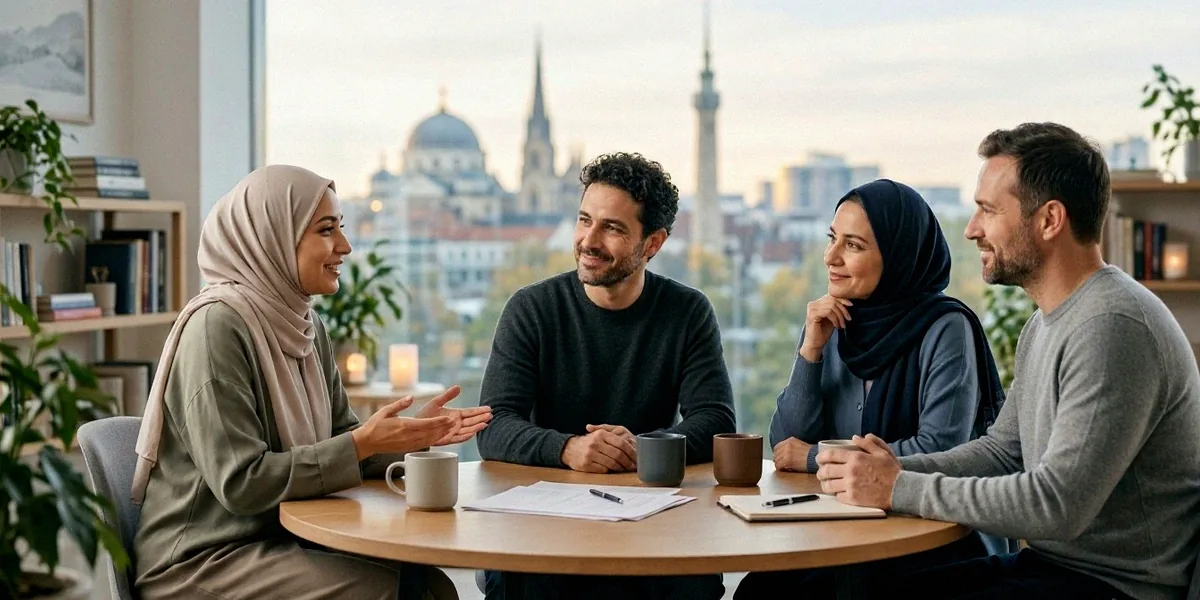
Most interfaith initiatives fail for predictable reasons. They are designed around events rather than relationships, they centre the voices of people who already agree with each other, and they evaporate the moment the funding runs out. The Inter Faith Network for the UK has long argued that sustained, local relationship-building is what actually shifts attitudes — not one-off conferences or press releases. We have taken that seriously, which means our interfaith work looks slower and less photogenic than what you might see elsewhere.
The Tokenism Trap
Tokenism is the most common failure mode we see. A mosque gets invited to send “a Muslim representative” to a civic event, that person speaks for three minutes, and nothing changes. Muslim women are especially vulnerable to this — we get invited as symbols of diversity rather than as leaders with institutional backing. When we accept invitations, we ask hard questions first: who else is in the room, what decisions will be made, and will we be involved after the event ends? If the answers are vague, we decline. It has cost us invitations, but it has also earned us genuine partnerships.
From Photo Op to Long-Term Partnership
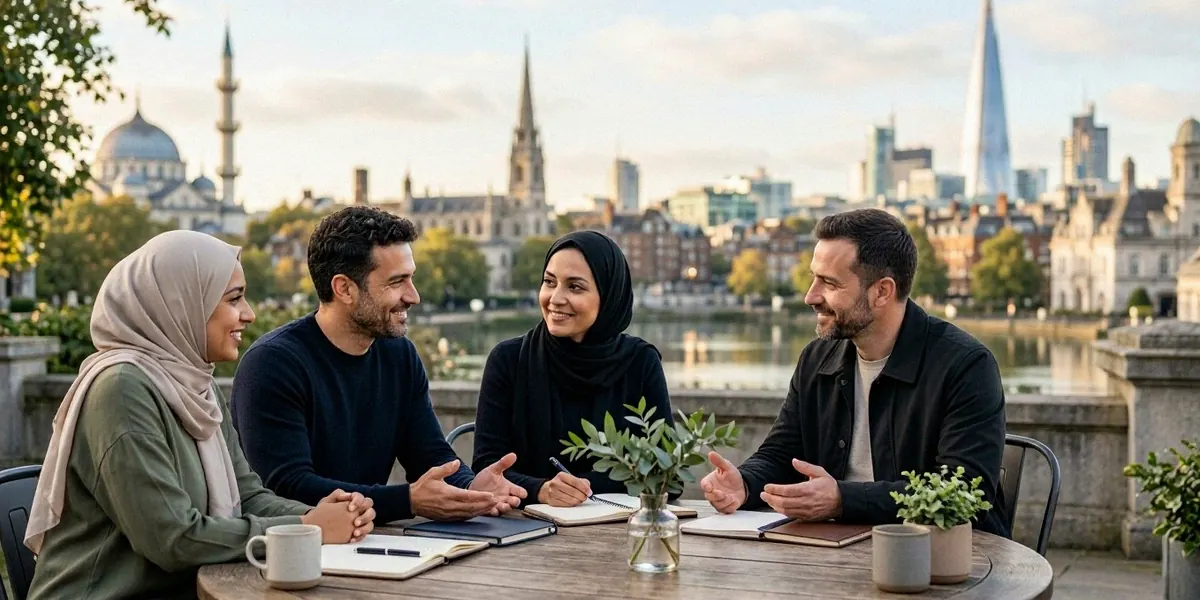
What works instead is unglamorous. Shared meals. Joint volunteering. Regular check-ins between people who have known each other for years. We build partnerships with a minimum two-year horizon, and we structure them around something concrete — a food drive, a school programme, a shared advocacy campaign — rather than around “dialogue” in the abstract. The Together Coalition’s work on community cohesion reflects this principle: relationships deepen through shared activity, not shared statements.
Our Model: Women-Led, Community-Rooted, Bradford-Based
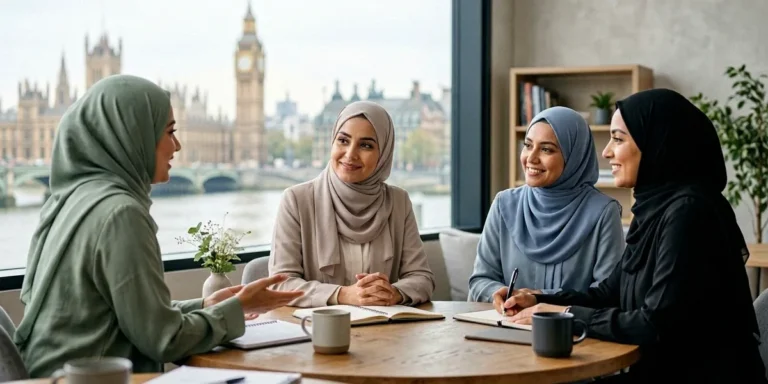
Our mosque is governed by a committee in which Muslim women hold the majority of leadership positions, including the chair and treasurer roles. That is not a gesture — it changes the priorities. Women in leadership tend to raise issues that male-dominated mosque committees often overlook: domestic abuse support, childcare during services, mental health provision, and genuine partnership with other faith communities rather than symbolic appearances.
How Our Governance Shapes Our Partnerships
Because our leadership is accountable to a local congregation rather than to external funders, we can say no to partnerships that do not serve our community. We also have the authority to commit resources — our own volunteers, our own budget — rather than relying on another organisation to facilitate everything. This matters. Interfaith work led by people with actual decision-making power looks very different from interfaith work delegated to whoever is available.
Working with Bradford’s Faith Communities
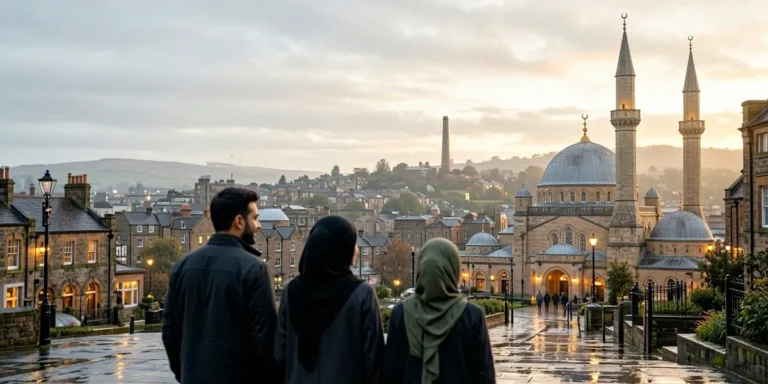
Bradford is one of the most religiously diverse cities in the UK, and that diversity is a practical reality rather than an abstract ideal. We work alongside the Bradford Council of Mosques on shared civic concerns, and we have built relationships with local churches, gurdwaras, and synagogues that go back years. Some of these relationships predate our mosque’s formal existence — they started over tea in community centres and grew from there.
Three Interfaith Projects That Actually Worked
We want to be specific, because vague claims about “building bridges” help nobody. Here are three projects that produced measurable results and lasting relationships.
Ramadan Food Drive with St. Peter’s Church
For three consecutive years, we have run a joint food drive with a local Anglican church during Ramadan. Church volunteers help with collection and distribution; our volunteers handle logistics and storage. The project is supported in part by Near Neighbours, whose small-grants model is well suited to this kind of practical, locally-led work. Last year the drive distributed over 1,200 food parcels across Bradford, and — importantly — the church and mosque now coordinate on food poverty issues year-round.
Women’s Storytelling Circle
This is the project we are proudest of. Once a month, Muslim, Jewish, and Sikh women meet in a neutral community space to share personal stories about faith, family, and identity. There is no agenda, no facilitator steering the conversation toward “dialogue,” and no press. Attendance has grown steadily, and several participants have gone on to collaborate on other projects independently. The circle works precisely because it is not trying to produce anything — it is simply a space where women can speak and be heard.
School Workshops on Faith and Gender
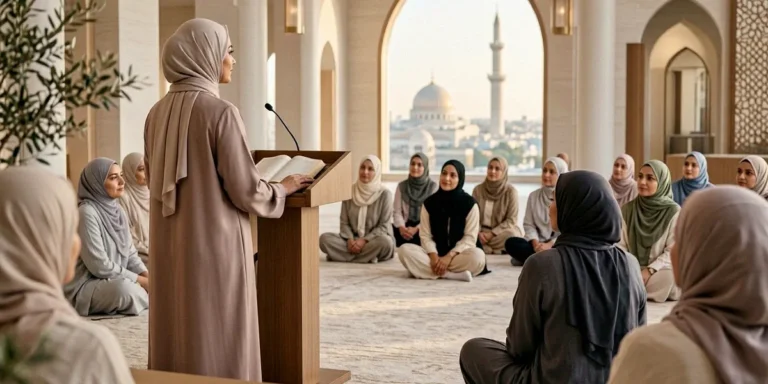
We deliver workshops in Bradford secondary schools on how faith communities approach gender and leadership. The workshops are co-taught with volunteers from other faith traditions, which means students hear multiple perspectives rather than a single institutional line. We have delivered sessions in eleven schools so far, and teacher feedback consistently highlights that students engage more when they meet real people rather than reading about religions in textbooks.
Practical Lessons for Mosque Governance
If you are running a mosque committee and want to do interfaith work properly, here is what we would tell you.
Budget and Resources
Interfaith work costs money, and pretending otherwise is dishonest. Set aside a specific line in your annual budget for it — even a modest amount. The Charity Commission expects trustees to manage resources prudently, and that includes being realistic about what community engagement actually requires. Volunteer time, venue hire, refreshments, printing, and travel all add up.
Involving Women in Decision-Making
Do not create a “women’s committee” that advises the real committee. Give women actual votes, actual budgets, and actual authority. Our experience is that this is not just fairer — it produces better decisions. The Muslim Council of Britain has published guidance on governance reform that many mosques would benefit from reading closely.
Measuring What Matters
Attendance figures tell you almost nothing. What matters is:
- How many partnerships continued beyond their initial funded period?
- How many participants took on leadership roles in subsequent projects?
- What concrete outcomes — food distributed, students reached, policies changed — resulted?
- What do partner organisations say about the relationship, honestly?
We track these metrics quarterly and report them to our committee. It keeps us honest.
What We’d Do Differently Next Time
We have made plenty of mistakes. Being open about them is part of what makes interfaith work credible.
Overcommitting and Burnout
In our second year, we said yes to too many projects and burned out our core volunteers. We learned that saying no is a governance skill, not a failure. Now we cap the number of active partnerships and rotate responsibilities deliberately.
Documenting Our Work Better
We assumed we would remember what we did. We did not. We now keep written records of every project — what worked, what did not, who was involved, and what we would change. Feedback loops with partners, including local interfaith forums and national bodies, have become routine rather than occasional.
FAQ
What is a women-led mosque?
A women-led mosque is one in which Muslim women hold significant governance and leadership roles, including decision-making authority over budgets, programmes, and partnerships. It does not mean men are excluded — it means women are not confined to auxiliary roles.
Can interfaith work be done by small mosques with limited resources?
Yes. Start with one partner organisation and one concrete project. Near Neighbours and similar small-grants programmes exist specifically to support locally-led work with modest budgets.
How do we approach the Bradford Council of Mosques about partnership?
Contact them directly with a specific proposal rather than a general expression of interest. They are more responsive to concrete ideas with clear aims and timelines.
What role does the Charity Commission play in mosque governance?
If your mosque is a registered charity, the Charity Commission sets expectations for trustee conduct, financial management, and accountability. Good interfaith work should fit within those governance standards, not sit outside them.
Interfaith work succeeds when it is embedded in how a mosque is governed and led — not bolted on as an afterthought or a PR exercise. Our experience in Bradford suggests that when Muslim women hold real leadership roles, the partnerships that follow are deeper, more honest, and more durable. We would love to hear from other mosques and community organisations about what has worked for you.