Designing Inclusive Places of Worship: Lessons from Women-Led Mosques
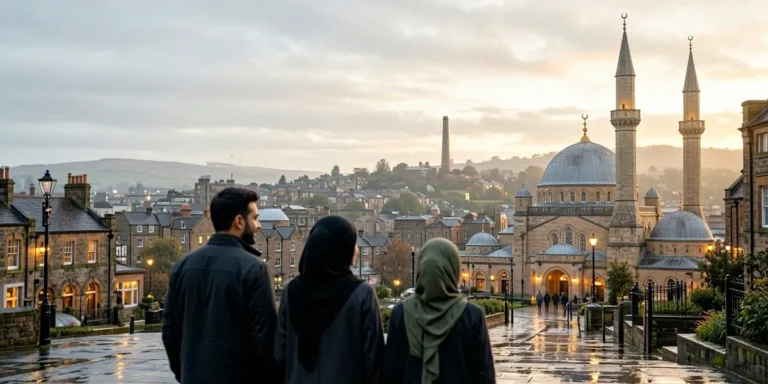
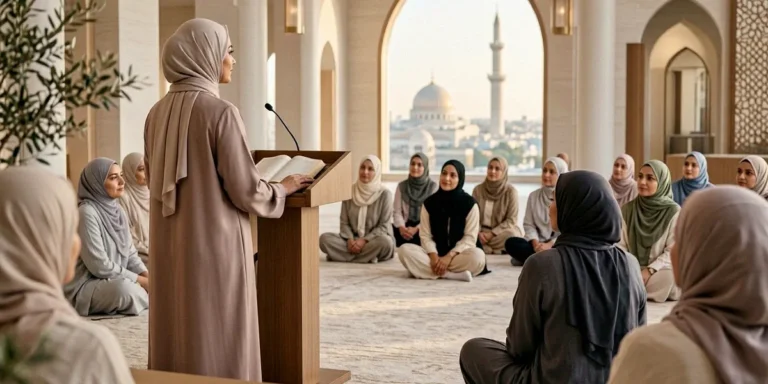
You push open the main door, step out of Bradford’s drizzle, and walk straight into the prayer hall. No side alley, no cramped back room, no peering through a gap in a partition. The space is open, the carpet stretches ahead of you, and the imam’s voice reaches every corner equally. This is what a mosque looks like when inclusion is designed in from the start rather than bolted on afterwards. At womenledmosque.co.uk, we believe that layout is never just about architecture. It is about who is welcome, who is visible, and who gets to shape the life of a community. In this guide, we share what we have learned from women-led mosques in the UK and beyond, and what any mosque committee can do to build a space that genuinely serves everyone.
Why Inclusive Design Matters for Muslim Women in the UK
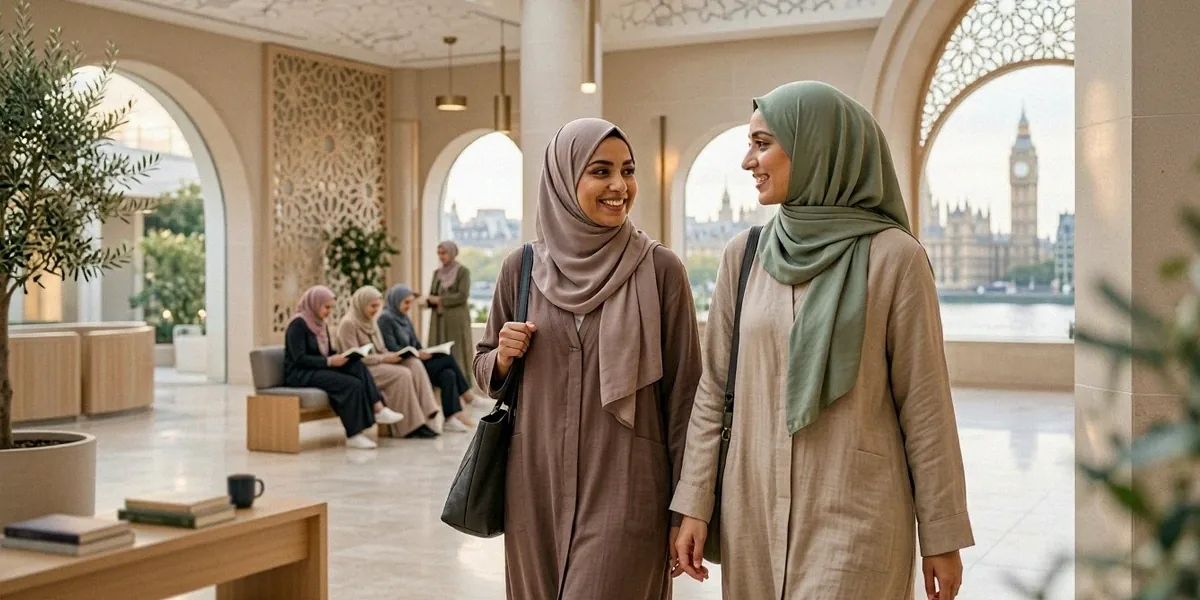
Mosques in Britain are more than prayer halls. They are community centres, advice hubs, marriage venues, funeral providers and political meeting places. When women are squeezed into inadequate spaces, they are excluded from all of that. The Women’s Mosque of America, a women-led mosque in Los Angeles, is often cited as an international model precisely because it showed that women’s full participation is not a radical experiment — it is simply good practice. Closer to home, the Muslim Council of Britain has published guidance on women’s participation in mosques, and the message is clear: access, facilities and decision-making power all matter.
The Hidden Barriers in Conventional Mosque Layouts
Most barriers are not announced in a sign on the door. They are built into the fabric of the building. Common problems we hear about from sisters across the UK include:
- Women’s entrances that are unlit, unlocked late, or hidden round the back near the bins.
- Prayer areas that are smaller, hotter, noisier, or separated by a curtain that blocks sight of the imam and the congregation.
- Wudu facilities that are shared with storage cupboards, or that lack step-free access and baby-changing space.
- No women on the mosque committee, meaning decisions about budgets and buildings are made without them.
- Rooms booked for nikahs and classes that are simply unavailable to women at peak times.
None of this is accidental. It reflects decades of decisions made by men, for men, often with the best of intentions and a genuine belief that space was limited. The result, though, is that many Muslim women in Britain pray at home not out of choice but out of exhaustion with the alternative.
What ‘Inclusive’ Actually Means in a British Muslim Context
Inclusion does not mean identical provision. It means equitable provision. A mosque in a converted terraced building in Bradford faces different constraints from a purpose-built mosque in East London. What stays constant is the principle: women should be able to see, hear, reach and influence what happens in the mosque. In practical terms, that means a main entrance women can use, a prayer area with a clear sightline to the imam, wudu facilities they can access without asking permission, and a seat at the table when the building is planned.
Learning from Women-Led Mosque Initiatives in Bradford and Beyond
Bradford has a long and proud history of Muslim women organising for themselves. The Bradford Muslim Women’s Council is a grassroots organisation advocating for women’s roles in local mosques, running consultations, and pushing gently but persistently for change. Its work is not about confrontation. It is about showing mosque committees that women’s participation strengthens the whole institution, from attendance figures to volunteer numbers.
Bradford’s Community-Led Approach to Mosque Governance
What makes the Bradford approach distinctive is its emphasis on relationships. Rather than publishing a list of demands, local women have built trust with imams and trustees through mosque open days, shared iftars, and joint fundraising. Those open days have been quietly transformative. When a trustee sees a hundred women walk through the main entrance for the first time, the argument that “there is no demand” collapses on the spot. We have watched similar work unfold in cities like London and Manchester, where women-led prayer spaces have emerged from community organising rather than top-down policy.
Case Study: Women-Led Jummah and Prayer Spaces in the UK
The Inclusive Mosque Initiative, a UK-based charity promoting inclusive prayer spaces, has been running women-led and mixed-gender prayers for over a decade. Its model demonstrates that the practical objections — about logistics, about tradition, about who leads — are all solvable. Cambridge Mosque’s women’s committee offers another example: a purpose-built space where women sit on committees, shape programming, and pray in a hall with proper sightlines and facilities. These are not fringe experiments. They are working mosques, with real congregations, in real British cities.
Practical Design Principles for Inclusive Places of Worship
Good design is not a matter of taste. It is a matter of following established principles. The RIBA (Royal Institute of British Architects) inclusive design principles are a useful starting point, and the charity Muslim Women’s Network UK has campaigned for years on exactly these issues. Here is what we would put in front of any mosque building committee.
Entrances, Prayer Halls and Sightlines
Women’s entrances should be on the main street frontage, well lit, and open at the same times as men’s. Inside, the prayer area should allow women to see the imam and the mihrab, either directly or via a screen that does not obscure the congregation. Where a mezzanine is used, the balustrade should be low enough to maintain visual connection. Acoustic design matters too: if women cannot hear the khutbah clearly, they are not fully participating.
Wudu Facilities, Childcare and Accessibility
Wudu areas for women should be at least equal in size and quality to men’s, with step-free access, non-slip flooring, and space for a pram or a wheelchair. A dedicated childcare room near the prayer hall — not at the far end of a corridor — allows mothers to pray without leaving the building. Accessible toilets and baby-changing facilities should be standard, not an afterthought. These are not luxuries. They are the difference between a mosque that welcomes families and one that quietly turns them away.
Governance by Design: Who Sits on the Building Committee?
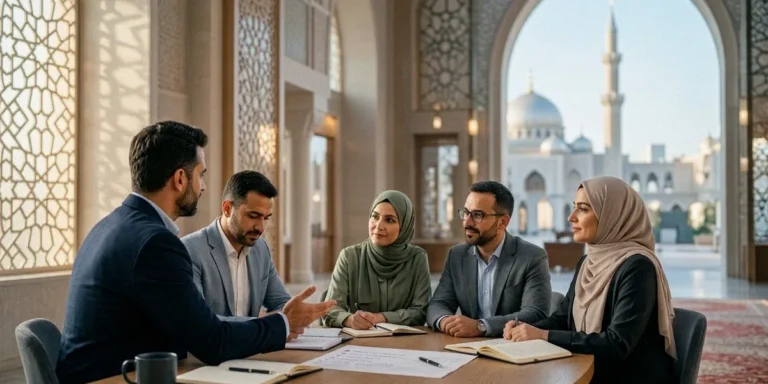
Design decisions are governance decisions. If no woman sits on the building committee, inclusive design will be treated as optional. We recommend that every mosque building or refurbishment committee includes at least two women with voting rights, and that the brief explicitly requires consultation with women in the congregation before plans are signed off. This is not tokenism. It is how you avoid spending half a million pounds on a hall that half your community cannot use.
Overcoming Resistance and Building Community Buy-In
Change rarely happens without friction. We have heard every objection, and we understand where most of them come from. The good news is that mosques in Birmingham and Leicester have shown that resistance can be overcome with patience, evidence and a bit of humour.
Answering the ‘But We’ve Always Done It This Way’ Argument
Tradition is not a static thing. The mosque of the Prophet in Medina had no fixed partition, and women prayed in the same space as men. What we call “traditional” is often just Victorian-era architecture filtered through South Asian and Middle Eastern custom. When a committee member says “we’ve always done it this way,” we ask a simple question: did it work? Did women come? Did they stay? Did their daughters? If the answer is no, then the tradition is failing the community it claims to serve.
Engaging Imams, Trustees and Local Councils
Allies matter. MEND (Muslim Engagement and Development) has supported mosque governance reform across the UK, and interfaith groups like the Council of Christians and Jews have been valuable partners in conversations about inclusive design, because they have faced the same challenges in churches and synagogues. Local councils can also help, through planning conditions that require accessible facilities and through community grants for refurbishment. The most successful mosque projects we have seen brought all of these partners to the table early.
The Future of Mosque Governance: Women at the Table
Inclusive design without inclusive governance is a half-measure. A beautiful women’s prayer hall means little if women have no say in how it is used, funded or maintained. The Charity Commission provides clear guidance on diversity in charity trustee boards, and that guidance applies directly to mosques. Trustee boards that reflect their communities make better decisions, attract more volunteers, and are less likely to end up in dispute.
From Consultation to Leadership: Women as Trustees
We want to see women not just consulted but leading. That means women as trustees, as treasurers, as chairs of building committees, as imams where the community is ready, and as the people who sign off on budgets. Cambridge Mosque’s women’s committee is a genuine example of this in practice, and it should be the norm rather than the exception. Bradford’s ambition to be a City of Culture 2025 is a chance for the city’s mosques to lead the way, showing that Muslim institutions can be at the forefront of inclusive design in Britain.
How Inclusive Mosques Strengthen the Whole Ummah
When women are welcomed into the main prayer hall, attendance rises. When families can pray together, young people stay connected to the mosque. When women sit on committees, safeguarding improves and fundraising broadens. Inclusion is not a zero-sum game where women gain and men lose. It is how a mosque becomes a genuine community institution rather than a building that only half the community uses.
Designing inclusive places of worship is not about dividing communities. It is about reflecting the full diversity of Muslim life in the UK — the mothers, the students, the grandmothers, the converts, the professionals, the volunteers. Every mosque in Britain can take a first step this month. Walk through your own mosque’s main entrance as a woman would. Look at the wudu facilities. Check who sits on the committee. Then ask what one change you could make. If you would like support, our team at womenledmosque.co.uk is always happy to talk.
FAQ
What is a women-led mosque?
A women-led mosque is a mosque where women hold leadership roles — as trustees, committee members, prayer leaders or imams — and where women’s participation is built into the design and governance of the building. The Women’s Mosque of America in Los Angeles is often cited as an international model, and similar initiatives exist across the UK.
Can women lead prayer in a mosque in the UK?
Yes. Women-led prayer spaces have existed in the UK for over a decade, including through the work of the Inclusive Mosque Initiative. Practices vary between communities and schools of thought, but there is no legal barrier in the UK to women leading women’s prayers or serving on mosque committees.
What does the Muslim Council of Britain say about women in mosques?
The Muslim Council of Britain has published guidance on women’s participation in mosques, encouraging better facilities, fair access and greater involvement in governance. It is a useful reference document for any mosque committee considering reforms.
How can I get involved in mosque governance in Bradford?
Start by attending mosque open days and community consultations, then ask about trustee or committee vacancies. The Bradford Muslim Women’s Council is a good point of contact for women who want to advocate for change in local mosques.
What is the Charity Commission’s guidance on trustee diversity?
The Charity Commission provides guidance on diversity in charity trustee boards, recommending that boards reflect the communities they serve. Since most mosques are registered charities, this guidance is directly relevant to how they recruit and appoint trustees.