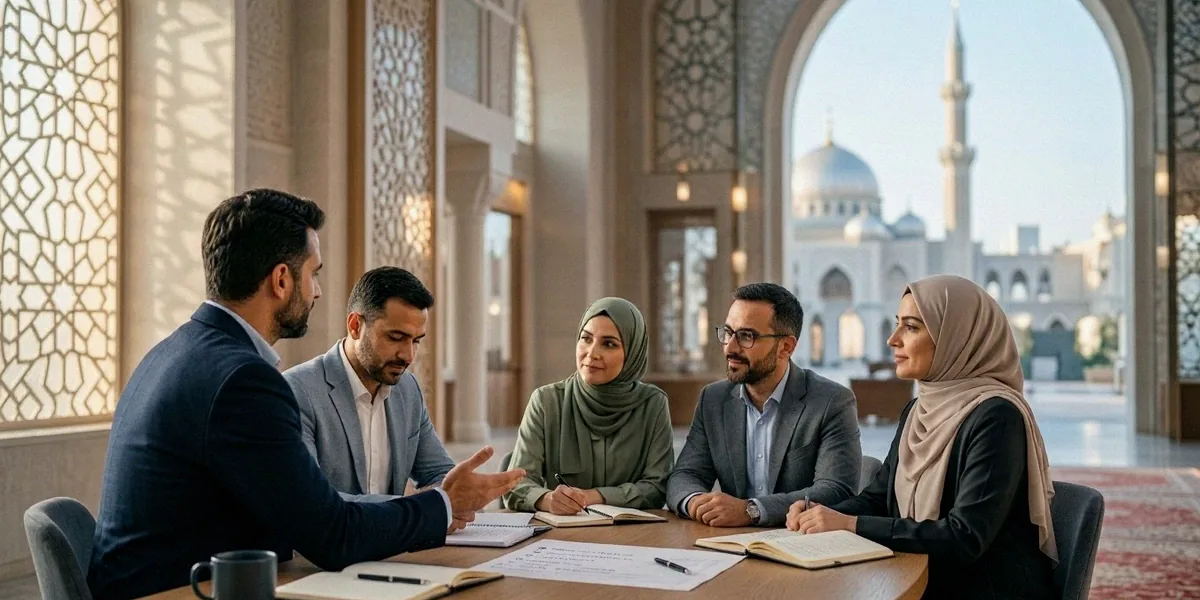
Mosque Governance: How Committees Work
Walk into almost any mosque committee room in Bradford and you will notice the same thing: it is full of men. Not because Muslim women are uninterested in the buildings where they pray, the madrasahs where their children learn, or the budgets that keep the lights on — but because the structures of mosque governance have quietly, and sometimes deliberately, kept them out. We want to change that. So let’s start at the beginning: what does a mosque committee actually do, and why does it matter who sits on it?
What a Mosque Committee Actually Does
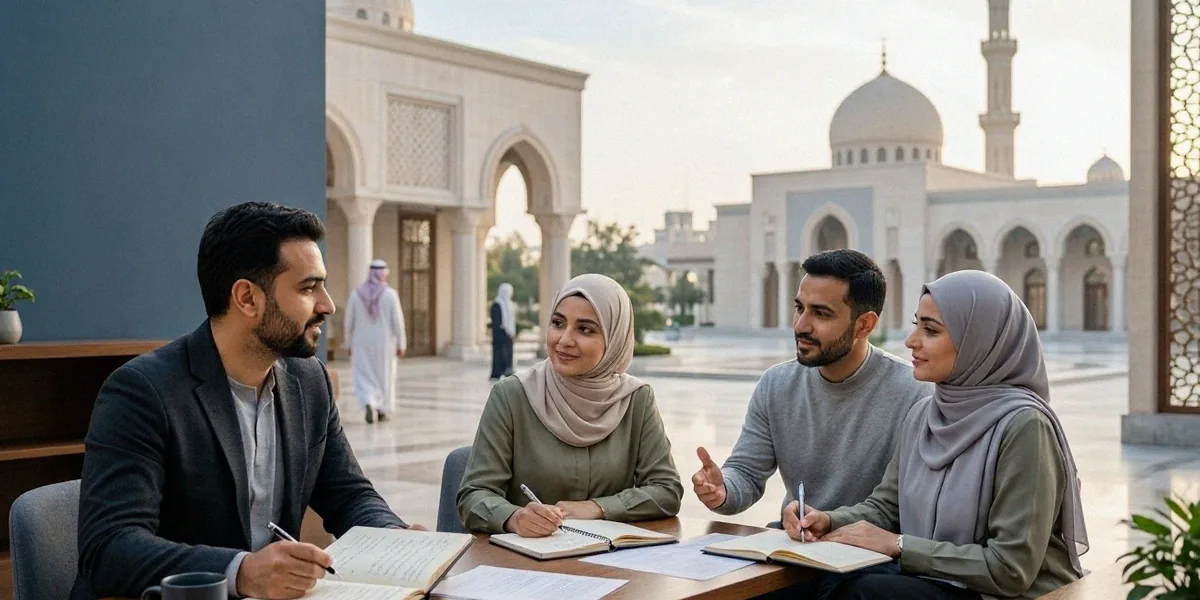
A mosque committee is the group of people legally responsible for running the mosque. That means everything from repairing the roof and paying the gas bill to employing the imam, approving the annual budget, and writing safeguarding policies for children and vulnerable adults. It is not a social club. It is a governing body with real legal weight.
Most mosques in the UK are registered charities, which means they answer to the Charity Commission. That brings a set of duties that many committee members do not fully realise when they take on the role.
Trustees, Executive Members and Volunteers
In charity law, the people who run a mosque are usually its trustees. Some mosques call them executive members, committee members or management committee members, but the legal role is broadly the same. Trustees can be held personally liable if things go badly wrong — for example, if funds are mismanaged or safeguarding failures occur.
Alongside trustees, mosques rely on volunteers: people who clean, cook, teach, run fundraising, and organise events. Volunteers are essential, but they do not usually hold decision-making power. That distinction matters enormously when we talk about who shapes a mosque’s direction.
Charity Commission Rules and Legal Duties
Because mosques are charities, trustees must follow rules set out by the Charity Commission. These include:
- Acting in the charity’s best interests, not their own
- Managing finances responsibly and keeping proper accounts
- Avoiding conflicts of interest
- Ensuring the charity complies with safeguarding and employment law
- Filing annual returns and accounts with the Charity Commission
These duties apply to every trustee, regardless of gender. The irony is that many mosques exclude women from trustee roles while still benefiting from women’s unpaid labour in almost every other area of mosque life.
Who Holds the Real Power?
In practice, power in many mosques sits with a small group of long-serving men. They may hold the bank mandate, control the constitution, and decide who is allowed to stand for election. Understanding where power actually sits — not just where the constitution says it sits — is the first step for any Muslim woman who wants to change things.
How Committee Elections and AGMs Work
Most UK mosques hold an Annual General Meeting (AGM) where trustees are elected or re-elected, accounts are presented, and members can ask questions. In theory, this is democracy in action. In practice, it is often where exclusion is formalised.
The Annual General Meeting Explained
An AGM typically covers:
- Approval of the previous year’s minutes
- Presentation of the treasurer’s report and accounts
- Election of trustees or committee members
- Any motions put forward by members
- Updates on major projects or building works
The AGM is a public moment. Anyone paying attention can see who is on the committee, how money is being spent, and whether women are represented. That transparency is why some committees keep AGMs low-key and poorly advertised.
Who Gets to Vote and Who Gets Excluded
Here is where things get uncomfortable. Many mosques restrict voting rights at the AGM to men who attend regularly — sometimes specifically to men who attend a certain number of prayers. Women who pray at home, who attend the women’s section, or who are simply not present at the men’s prayer hall are excluded from the electorate entirely.
In cities like Bradford, where mosques are often the centre of community life, this means women are shut out of decisions about their own children’s education and their own spaces of worship. It is not a legal requirement. It is a choice — and it can be changed.
Transparency, Minutes and Accountability
Charity law requires mosques to keep proper records. Minutes of AGMs and committee meetings should exist, and members have a right to see the constitution and annual accounts. If a mosque refuses to share these, that is a red flag. We always encourage women to request them in writing and keep a record of the response.
Why Women Are Missing From Mosque Governance
If you ask most mosque committees why there are no women, you will hear variations of the same answer: “No one has asked,” “It’s not our culture,” or “Women are busy with family.” None of these hold up to scrutiny. The barriers are structural, and they are well documented.
Cultural Barriers and Unwritten Rules
Many mosques operate on unwritten rules that never appear in the constitution. Committee meetings are held late at night in rooms women cannot easily access. Decisions are made in WhatsApp groups and informal gatherings after Isha. Leadership is treated as a male domain, and women who push back are often labelled divisive. These are not religious requirements — they are cultural habits dressed up as tradition.
The Cost of Exclusion for Muslim Women
When women are absent from governance, several things happen:
- Women’s prayer spaces are treated as an afterthought
- Safeguarding policies ignore the realities of women and girls
- Domestic abuse support is not prioritised
- Youth programmes are designed without mothers’ input
- Money is spent on projects men value, not the whole community
The cost is not abstract. It is felt every Friday.
What the Research Tells Us
The Muslim Council of Britain has published research showing that women are significantly underrepresented on mosque committees across the UK, with many mosques having no female trustees at all. This is not a fringe issue. It is the norm — and it is exactly why projects like ours exist.
What Women-Led Mosque Governance Looks Like
At womenledmosque.co.uk, we are building a different model. Not a separatist one, but an inclusive one — where women are not guests in the committee room but co-owners of the decisions made there.
Rotating Chairs and Shared Decision-Making
We rotate chairing responsibilities so that no single person accumulates informal power. Every major decision is discussed openly, minuted, and reviewed. Leadership is treated as a trust, not a throne.
Safeguarding, Finance and Community Voice
We put safeguarding and finance at the centre of every meeting, and we actively invite community feedback through surveys and open forums. Women’s voices are not a special interest — they are half the community.
Lessons From Bradford and Beyond
We draw inspiration from groups like the Inclusive Mosque Initiative in London and the Women’s Mosque of America, both of which have shown that women-led and women-inclusive mosque spaces are not only possible but thriving. Bradford has the same potential — if we organise.
How to Get Involved in Your Mosque Committee
If you are a Muslim woman who wants to join or reform your mosque’s governance, you do not need permission to start. You need information, allies, and persistence.
Start With the Constitution and Accounts
Request the mosque’s constitution and most recent annual accounts in writing. These documents tell you who can be a trustee, who can vote, and how elections work. If the mosque is a registered charity, you can also find its records on the Charity Commission website.
Standing for Election as a Trustee
If the constitution allows women to stand, put yourself forward. Attend the AGM, speak clearly, and bring supporters. If the constitution excludes women, that is your campaign: change the constitution first.
Building Coalitions Inside the Mosque
You will not do this alone. Build relationships with sympathetic committee members, imams and older community figures. Frame your case around safeguarding, transparency and legal compliance — not just fairness. Those arguments are harder to dismiss.
FAQ
Can women be trustees of a mosque in the UK?
Yes. Charity law does not prevent women from being trustees. Any restriction comes from a mosque’s own constitution, not from the Charity Commission.
What if my mosque says women cannot vote at the AGM?
Check the constitution. If it restricts voting to men, that is a governance choice, not a legal requirement. You can campaign to change it, and you can ask the Charity Commission for guidance if trustees are acting outside their duties.
Do I need to be a regular attendee to join a mosque committee?
It depends on the constitution. Many mosques require members to attend a certain number of prayers or pay a subscription. These rules often disadvantage women and should be reviewed.
Where can I find support for women-led mosque governance?
Groups like the Inclusive Mosque Initiative and the Muslim Council of Britain publish resources. Here at womenledmosque.co.uk, we share practical guidance and connect Muslim women across the UK, including in Bradford.
Is women-led mosque governance Islamically valid?
Yes. There is no Islamic requirement that mosque committees be male-only. Women led, taught and funded mosques in early Islamic history, and there is strong scholarly support for women’s full participation in community affairs.
Mosque governance is not a men’s-only space. It never was meant to be. Muslim women in Bradford and across the UK have every right — legal, ethical and Islamic — to sit at the table where decisions about their community are made. The work is hard, but the door is open. We just have to walk through it together.