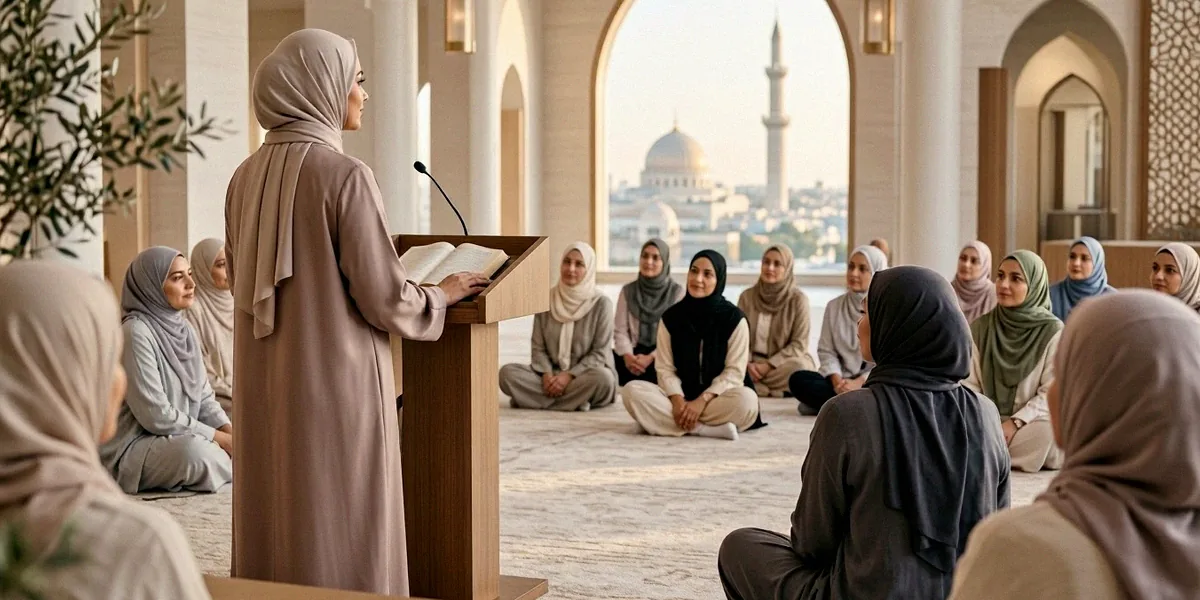
The Idea of a Women-Led Mosque Explained
When we tell people we run a blog about women-led mosques in the UK, the reaction is rarely neutral. Some lean in with curiosity. Others raise an eyebrow and ask what we actually mean. In many British Muslim communities, the phrase “women-led mosque” sparks debate before anyone has had the chance to explain it properly. We think that conversation deserves clarity rather than slogans, so this page sets out exactly what we mean, what we do not mean, and why places like Bradford are central to the story.
What We Mean by a Women-Led Mosque
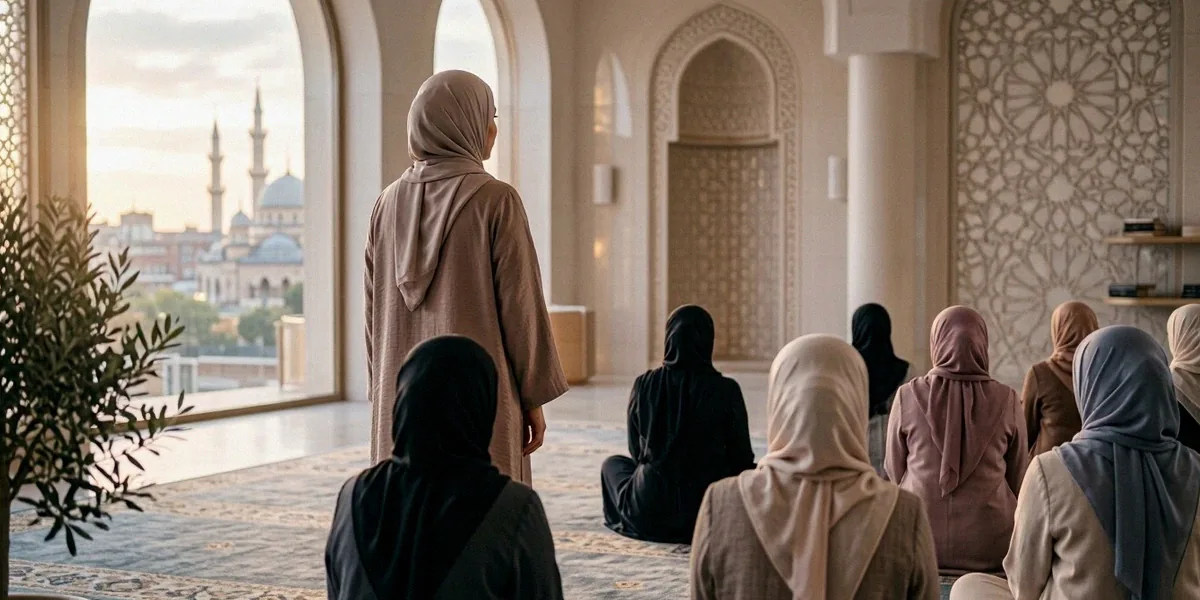
A women-led mosque is not a mosque without men. It is a mosque where women hold real decision-making roles — in governance, in how prayer spaces are organised, and in the community services a mosque provides. That could mean a woman chairing the trustee board, women sitting on the committee that manages finances, or women leading the design of youth and welfare programmes. The Bradford Muslim Women’s Council has spent years doing exactly this kind of work in West Yorkshire, and the Inclusive Mosque Initiative in London has built a model where women share leadership of prayers, events and safeguarding. Neither exists to push men out. Both exist to make sure women are not pushed to the margins.
Leadership vs. Segregation: What It Is Not
We want to be direct here, because this is where most confusion starts. A women-led mosque is not a separatist project, and it is not a campaign to ban men from congregational prayer. It is not a claim that men are unwelcome or that mixed congregations are forbidden. What it challenges is a narrower assumption: that leadership in a mosque must always be male by default. Segregation of prayer lines is a separate question from who chairs the committee, signs the charity accounts or decides how the building is used during the week.
Prayer, Space and Practical Arrangements
In practice, women-led and women-inclusive mosques handle prayer and space in different ways. Some maintain traditional separate prayer areas but give women control over their own section, including access, cleanliness, sound quality and entry routes. Others run women-only congregational prayers alongside mixed congregational prayers. A few, like the Inclusive Mosque Initiative, hold mixed-gender prayer with women leading. There is no single template, and we think that is a strength rather than a weakness. The common thread is that women are making the decisions, not simply being accommodated after the fact.
Why Bradford and Other UK Cities Are Part of This Conversation
Bradford is one of the youngest cities in the UK and home to one of the largest Muslim populations in the country. That combination has produced decades of grassroots organising, from supplementary schools to welfare charities to interfaith work. It is not surprising that questions about who leads mosques surface here first and loudest. Similar conversations are unfolding in Birmingham and London, where Muslim communities are equally diverse and increasingly unwilling to accept leadership structures that do not reflect the people who use them.
Bradford’s Community Leadership Landscape
The Bradford Muslim Women’s Council has been a steady presence in this space, supporting women to take up public roles, running community programmes, and pushing for better representation in local institutions. Bradford’s wider history of community organising — across faith, class and neighbourhood lines — gives women here a framework to build on. When we talk to women in the city, the frustration is rarely about theology. It is about being asked to fundraise, cook, teach and clean, but not to sit on the board that decides where the money goes.
Lessons from Birmingham and London
Birmingham Central Mosque’s community programmes show how a large, established institution can widen participation through education, welfare and youth work. In London, the Inclusive Mosque Initiative has demonstrated that a women-led model can survive and grow in a major city with a hugely varied Muslim population. The lesson we take from both is that change rarely arrives as a single dramatic reform. It arrives through committees, job descriptions, safeguarding policies and the slow, unglamorous work of inviting women onto boards.
The Role of Muslim Women in Mosque Governance
Most UK mosques are registered charities, which means they are governed by trustees and run by committees. That structure matters far more than many worshippers realise, because trustees control property, employment, safeguarding and finances. If women are absent from those rooms, decisions about women’s facilities, safety and access get made without them. Charity Commission governance guidance for mosques is clear that trustees must act in the charity’s best interests and ensure it is well run. In our view, a board that excludes half its congregation is not well run.
Trustees, Committees and Charity Law
Under UK charity law, trustees carry legal duties: to comply with the governing document, to manage resources responsibly, and to avoid personal benefit. There is nothing in that framework that requires trustees to be male, and nothing that prevents a woman from serving as chair, treasurer or secretary. Many mosque constitutions, however, were written decades ago and quietly assume male leadership. Updating those documents is one of the most practical steps any mosque can take.
Accountability and Representation
Representation is not just a symbolic issue. When a mosque board reflects its congregation, it tends to make better decisions about timetabling, accessibility, childcare, domestic abuse referrals and mental health support. It also builds trust with younger Muslims, who are more likely to stay engaged with an institution they can see themselves leading one day. We have seen this play out in small ways across Bradford and beyond.
- Women on boards improve oversight of safeguarding and complaints.
- Diverse committees make better use of volunteers and donations.
- Visible female leadership encourages younger women to participate.
- Clear governance reduces the risk of internal disputes and reputational damage.
Common Questions and Misconceptions
We get the same handful of questions repeatedly, and we would rather answer them openly than dodge them. Some come from genuine concern, others from misinformation. Either way, they deserve a straight response.
Is It Islamically Permissible?
Yes, in our reading and in the practice of many scholars and communities. Islamic history includes women who taught, transmitted hadith, funded mosques and held positions of religious authority. The question of who sits on a committee or manages a building is a matter of custom and governance, not a fixed pillar of the faith. Muslims disagree about many details, and we respect that. What we reject is the claim that women’s leadership is inherently un-Islamic.
What About Men and Mixed Spaces?
Men are welcome in women-led mosques. Some initiatives run mixed-gender prayer; others keep separate prayer lines but share leadership and decision-making. UK law protects both religious freedom and equality, and mosques are expected to comply with charity and employment law while serving their communities. There is no legal requirement for a mosque to be male-led, and no legal barrier to women leading one.
How We See the Future of Women-Led Mosques in the UK
We are not predicting a sudden wave of women-led mosques across Britain. We are watching a slower, steadier shift: women joining trustee boards, chairing committees, running programmes and, in a growing number of cases, leading congregations. The Women’s Mosque of America offers an international reference point for what a women-led prayer space can look like, but the UK is developing its own models, shaped by British charity law, local demographics and the specific histories of cities like Bradford, Birmingham and London.
Building Alliances Across UK Communities
Alliances matter more than headlines. We want to see women-led initiatives working alongside established mosques rather than positioning themselves as rivals. That means shared training on governance, joint safeguarding reviews, and honest conversations about what congregations actually need. The Bradford Muslim Women’s Council and similar groups have shown that cooperation, not confrontation, tends to move things forward.
Practical Steps for Local Mosques
- Review your constitution and remove any wording that assumes male trustees.
- Advertise trustee and committee vacancies openly, including to women’s networks.
- Audit facilities for women’s access, safety and sound quality.
- Invite women onto safeguarding and finance subcommittees.
- Publish minutes and annual reports so the whole congregation can see how decisions are made.
FAQ
Is a women-led mosque the same as a women-only mosque?
No. A women-led mosque is about who holds leadership and governance roles. Some are women-only in certain prayers or programmes, but many welcome men and run mixed or parallel activities.
Does UK charity law allow women to be mosque trustees?
Yes. Charity Commission governance guidance for mosques applies equally to men and women. Trustees must act in the charity’s best interests, and there is no legal restriction on women serving as chair, treasurer or secretary.
Are women-led mosques a new idea?
Not entirely. Women have funded, taught in and organised around mosques for centuries. What is newer in the UK is the formal push for women to sit on trustee boards and lead community programmes, as seen with the Bradford Muslim Women’s Council and the Inclusive Mosque Initiative in London.
How does the Women’s Mosque of America fit in?
It is an international comparison rather than a template. It shows that a women-led prayer space can operate successfully, but UK initiatives tend to adapt to British charity structures and local community needs.
Can I get involved if my local mosque is not women-led?
Yes. Ask about trustee vacancies, volunteer for a subcommittee, or start a conversation with your imam or board about representation. Change usually begins with one practical question.
Women-led mosques are not an imported idea or a rejection of tradition. They are a UK-rooted expression of Muslim community leadership, built by women who pray, fundraise, teach and organise in cities like Bradford, Birmingham and London. When women help govern a mosque, the whole congregation benefits — stronger accountability, better services and a clearer sense that everyone has a stake in the building. We believe that strengthens our communities rather than dividing them, and we are glad to be part of the conversation.